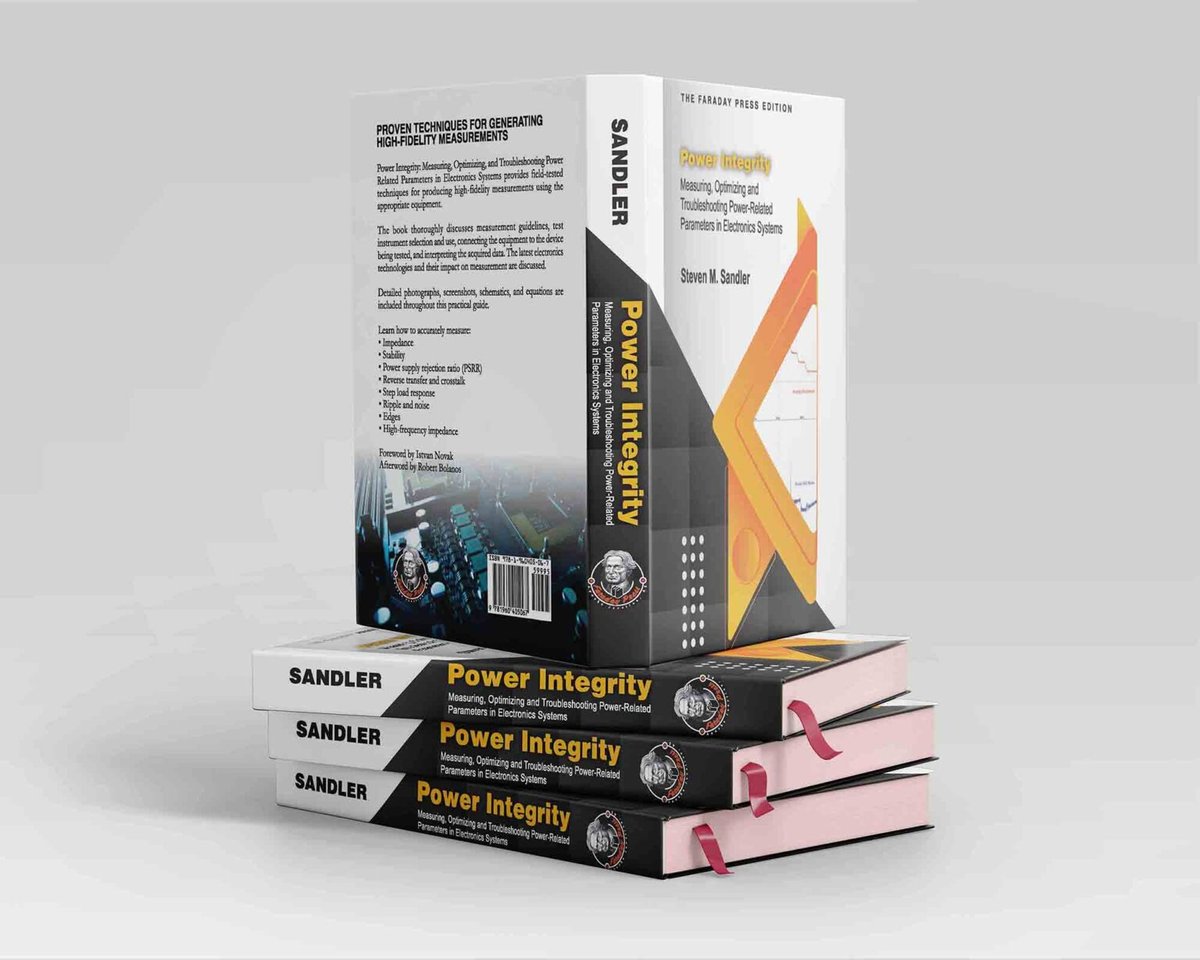
In today’s lightning-fast world, where every nanosecond counts, the demands on electronic devices are more intense than ever. From the smartphones in our pockets to the AI servers powering our future, the underlying architecture of these marvels—the integrated circuit (IC) board—is pushed to its absolute limits. This intense pressure calls for nothing less than advanced IC board design techniques, particularly when it comes to managing high-speed signals, radio frequency (RF) integrity, and robust power delivery. It’s no longer enough for a circuit to simply work; it must perform flawlessly, transmit data without a whisper of error, and consume power efficiently, all while staying cool.
Think of it this way: if a modern IC board were a city, its traces would be the highways, its power planes the electrical grid, and its components the bustling buildings. Advanced design is about ensuring these highways are perfectly paved, traffic flows unimpeded at incredible speeds, and the power grid never falters, no matter the demand. It’s a complex, challenging, and utterly essential discipline that separates cutting-edge performance from frustrating failure.
At a Glance: Navigating Advanced IC Board Design
- Signal Integrity (SI) is paramount: Keep high-speed data clean and error-free by combating reflections, crosstalk, and EMI.
- Power Integrity (PI) ensures stability: Deliver consistent, ripple-free power across the board, even under heavy load.
- Thermal Management is non-negotiable: Prevent performance degradation and hardware failure by efficiently dissipating heat.
- Advanced materials are key: High-speed FR4, ceramic, and novel dielectrics enable faster, more reliable designs.
- Smart routing is foundational: Techniques like differential pairs, topology-based layouts, and multi-layer routing optimize signal paths.
- Simulation is your crystal ball: Predict and mitigate issues like SI, PI, and thermal hotspots before manufacturing.
- Future is AI-driven: Machine learning is already optimizing routing, predicting problems, and accelerating design cycles.
The Unseen Battle: Why Standard Design Just Doesn't Cut It Anymore
The digital world thrives on speed. Data rates on IC boards have soared to 100Gbps and beyond, while RF applications push frequencies into multi-gigahertz ranges. This intense performance creates a host of problems that traditional PCB design simply can't handle. We're talking about invisible forces that can cripple a board:
- Signal Integrity (SI) Issues: Imagine trying to have a clear conversation in a noisy room. That's what signals experience when SI is poor. Reflections bounce signals back, causing distortion. Crosstalk, like a conversation bleeding into another, occurs when signals on adjacent traces interfere with each other. And electromagnetic interference (EMI) acts like a disruptive external noise, degrading signal quality. The consequences? Reduced data rates, higher error rates (even a 10% SI loss on a 100Gbps link can lead to 10,000 errors per second!), and outright system failures.
- Power Integrity (PI) Headaches: A stable power supply is non-negotiable. With high-speed switching, current demands can fluctuate rapidly, causing voltage sags or spikes. If your power delivery network (PDN) can't keep up, components might brown out, misbehave, or crash.
- Thermal Management Nightmares: High-speed ICs and complex power delivery generate significant heat. Left unchecked, this heat can degrade performance, shorten component lifespan, and even lead to catastrophic failure.
These aren't abstract problems; they're the direct cause of frustrating glitches, unreliable devices, and costly redesigns. Addressing them requires a sophisticated, multi-faceted approach, diving deep into every aspect of the board's physical design and electrical behavior.
Mastering Signal Integrity: The Art of Clean Signals
Achieving impeccable signal integrity is the bedrock of any high-performance IC board. It's about guiding signals along their paths with minimal degradation, ensuring that the '1s' and '0s' arrive at their destination exactly as intended.
The Core Challenges & How to Counter Them
Your primary adversaries in SI are reflections, crosstalk, and EMI. Thankfully, a suite of advanced techniques helps you neutralize them:
- Controlled-Impedance Traces: Think of signal traces as transmission lines. For clean signal transfer, their impedance must be carefully matched to the source and load. Any mismatch causes reflections, akin to a wave hitting a wall and bouncing back. Achieving controlled impedance involves precise trace width, dielectric thickness, and material properties.
- Strategic Ground Planes: Ground planes aren't just for return paths; they act as a crucial shield against EMI and provide a stable reference voltage. Proper design dictates solid ground planes directly beneath signal layers, minimizing impedance and loop areas for return currents.
- Specific Spacing Rules: The closer traces are, the more likely they are to crosstalk. A common rule of thumb for preventing this is to maintain a minimum distance of
3x trace widthbetween high-speed traces. For differential pairs, the traces are intentionally kept very close, leveraging their complementary nature to cancel out noise. - Advanced PCB Materials: Not all FR4 is created equal. High-speed digital circuits and RF applications demand materials with lower dielectric loss (Df) and a more stable dielectric constant (Dk) across frequency. Materials like high-speed FR4 variants and ceramic substrates significantly improve signal transmission by reducing attenuation and maintaining consistent impedance.
- Differential Signaling: This technique, used in everything from USB-C and HDMI to 5G communications, is a cornerstone of robust high-speed design. Instead of a single signal trace referenced to ground, differential pairs use two complementary signals (one inverting, one non-inverting) on closely spaced traces. Noise induced equally on both traces is effectively canceled out at the receiver, making them highly resistant to common-mode noise and EMI.
- Optimized Layer Stackup: The arrangement of signal, power, and ground layers is crucial. A well-designed 8-layer stackup, for instance, might follow a pattern like
Signal → Ground → Power → Signal → Signal → Power → Ground → Signal. This provides immediate ground or power planes for return paths, minimizing loop inductance and improving both SI and PI. For a deeper dive into the foundational elements that contribute to such advanced solutions, you might want to learn about IC board design more broadly.
The Evolution of Routing: From Simple Paths to Intelligent Networks
Routing isn't just connecting points; it's orchestrating signal flow. Advanced techniques ensure optimal performance:
- Topology-Based Routing: For complex memory interfaces like DDR5, signals aren't routed point-to-point. Instead, topologies like "fly-by" routing are used, where signals branch off from a main trunk to multiple memory devices. This minimizes stub lengths, reduces loading effects, and ensures signals arrive synchronously, crucial for high-speed memory buses.
- Multi-layer Routing: By separating different types of signals onto dedicated layers (e.g., high-speed digital on one, low-speed analog on another, RF signals on their own controlled layer), you drastically reduce crosstalk and improve SI. This becomes even more critical when working with high-density interconnect (HDI) boards.
- 3D Routing and Stacked ICs: In highly compact designs, especially System-in-Package (SiP) solutions, 3D routing leverages vertical space. Stacking ICs and using technologies like through-silicon vias (TSVs) allows for significantly shorter trace lengths—up to 40% reduction—which directly translates to lower latency, less attenuation, and better SI. However, this dramatically increases design complexity.
The ground truth tells us about specific "High-speed routing protocols in ICs," which are distinct from general network routing protocols. These protocols facilitate internal data flow within complex ICs/SoCs: - RIP (Routing Information Protocol): For less complex ICs, RIP can manage data paths up to 100Mbps. It's simpler but less scalable.
- OSPF (Open Shortest Path First): For high-speed SoCs exceeding 1 Gbps, OSPF offers dynamic path selection and efficient routing. It's adaptive and robust for complex internal networks.
- SRv6 (Segment Routing over IPv6): Pushing 10+ Gbps, SRv6 is designed for next-generation 5G core ICs. It provides scalable, programmable routing, essential for advanced features like network slicing, crucial for varied 5G services.
Via Strategy: More Than Just a Hole
Vias (vertical interconnect access) can introduce impedance discontinuities. Smart via strategy is critical:
- Blind and Buried Vias: These don't go through all layers of the board. Blind vias connect an outer layer to an inner layer, while buried vias connect two inner layers. They reduce stub length (the unused portion of a via that can act as an antenna and cause reflections), minimize parasitic capacitance and inductance, and allow for higher routing density.
- Via-in-Pad (VIP): Placing vias directly in component pads, often filled and plated over, allows for much denser component placement and shorter traces.
Power Integrity: Fueling Flawless Performance
Just as important as clean signals is clean, stable power. Power Integrity (PI) ensures that every component receives the exact voltage and current it needs, precisely when it needs it, free from noise and fluctuations.
The Power Delivery Network (PDN)
The PDN is the lifeline of your board, consisting of power planes, ground planes, decoupling capacitors, and power traces. An optimized PDN minimizes impedance across all frequencies, ensuring voltage stability.
- Efficient Power Planes: Solid power and ground planes are critical. They act as low-impedance conductors, distributing power and providing a stable return path for currents. The closer a power plane is to a ground plane (forming a plane pair), the more effective it is as a low-inductance capacitor, storing charge and releasing it quickly to meet instantaneous current demands.
- Decoupling Capacitors: These are your first line of defense against transient voltage drops. Placed strategically close to IC power pins, they provide local charge reservoirs, smoothing out current spikes during switching events. A mix of capacitor values (e.g., 0.1uF, 0.01uF, 1nF) covers a broad frequency spectrum of noise suppression.
- Power Integrity Analysis and Simulation Tools: Modern tools are indispensable for PI. They allow designers to model the entire PDN, identifying voltage drops, current densities, and resonance points. This pre-manufacturing analysis, often using electromagnetic field solvers, helps optimize capacitor placement, plane sizing, and via distribution, significantly enhancing reliability.
- Thermal Considerations in PDN: High current densities in power planes or traces can lead to localized heating. PI tools can also simulate thermal profiles linked to current flow, ensuring that power delivery doesn't create hot spots.
Tackling Thermal Management: Keeping Your Cool Under Pressure
Heat is the enemy of performance and longevity. As ICs become denser and faster, they generate more heat, necessitating sophisticated thermal management strategies.
- Heat Sinks and Fans: These are the most common active and passive cooling solutions. Heat sinks increase the surface area for heat dissipation, while fans actively move air over them. Optimized placement and sizing are crucial.
- Thermal Interface Materials (TIMs): These materials (like thermal paste or pads) fill microscopic air gaps between components and heat sinks, maximizing heat transfer efficiency.
- Thermal Vias: Connecting hot components to internal ground or power planes (which act as heat spreaders) or to larger thermal pads on outer layers through an array of thermal vias can significantly improve heat dissipation.
- Advanced Simulation and Thermal Analysis Software: Just like with SI and PI, thermal simulation tools are vital. They model heat generation, conduction, convection, and radiation across the board, pinpointing potential hot spots and allowing designers to optimize cooling solutions before fabrication, preventing performance degradation and outright failures.
The Toolkit: Simulation, Analysis, and Optimization
Gone are the days of building prototypes and hoping for the best. Modern advanced IC board design relies heavily on sophisticated software to predict, analyze, and optimize performance before a single trace is etched.
- Pre-Manufacturing Analysis: Dedicated simulation tools allow engineers to analyze SI, PI, and thermal aspects comprehensively. This means you can identify and fix potential problems—like reflections, voltage drops, or hot spots—in the virtual world, saving enormous amounts of time and money compared to fixing issues on physical prototypes. This optimization enhances performance, reliability, and cost-effectiveness simultaneously.
- AI-Driven Tools: The future is here. AI and Machine Learning (ML) are transforming the design landscape. Tools like Siemens Xcelerator leverage AI to predict SI issues, optimize routing for various parameters (power, traffic, material properties), and even automate complex layout tasks. AI can cut design time by up to 30%, making previously impossible designs feasible. This capability extends to optimizing network metrics such as achieving 80-90% bandwidth utilization, keeping latency under 10ns for real-time applications, and significantly reducing power consumption through shorter, optimized traces.
Real-World Impact: Where Advanced Design Shines
The techniques we've discussed aren't academic exercises; they are the backbone of modern technology.
- 5G Communication Equipment: The massive data rates and low latency requirements of 5G would be impossible without advanced IC board design. Optimized routing and meticulous SI/PI management have led to a 30% increase in 5G base station data transfer speeds and a 20% reduction in latency in critical applications.
- High-Performance Computers: Supercomputers, AI accelerators, and high-end gaming systems push the boundaries of processing power. Advanced routing and robust power delivery have boosted supercomputer processing speeds by 15%, enabling complex simulations and data crunching that were unimaginable a decade ago.
- Automotive Electronics: From autonomous driving systems to in-car infotainment, modern vehicles are packed with high-speed and RF circuits. Ensuring reliability and performance in harsh automotive environments is a testament to the robustness of advanced design techniques.
Beyond the Horizon: Future Frontiers in IC Board Design
Innovation in this field never stops. Researchers and engineers are constantly exploring new materials and methodologies to unlock even greater performance:
- Novel Materials: The quest for ultra-low resistance traces and superior dielectrics continues. Materials like graphene hold immense promise for ultra-low-resistance traces, potentially eliminating many current SI challenges. New dielectric materials with even lower loss tangents and more stable dielectric constants will enable higher frequencies and even better SI.
- Quantum IC Routing: While still in its nascent stages, quantum computing introduces entirely new paradigms for signal processing. This will necessitate quantum IC routing techniques to manage quantum bits (qubits) and their incredibly delicate interactions. Expect this area to rapidly evolve as quantum computing matures. For engineers focused on pushing boundaries, understanding the intricacies of advanced routing techniques for IC boards is a constant pursuit.
- Integrated Photonics: Merging optical and electronic signals on the same substrate could lead to unprecedented data transfer speeds and efficiency.
These future trends promise to push the boundaries of what's possible, tackling persistent SI issues, managing increasingly high power consumption, and navigating the ever-growing design complexity head-on. As data rates climb and frequencies soar, the expertise in areas like signal integrity in high-speed design will become even more specialized and critical.
Common Questions & Misconceptions About Advanced IC Board Design
"Is advanced design only for super high-speed devices?"
Not at all. While the focus is often on high-speed, RF, and power-hungry applications, many principles apply to even moderately complex boards. Good signal integrity, power delivery, and thermal management prevent unforeseen issues and improve reliability across a wide range of devices. Think of it as building a house: even if it's not a skyscraper, you still want a solid foundation, reliable plumbing, and proper insulation. For any design where performance and reliability are critical, understanding PCB design for signal integrity is a must.
"Can't I just use thicker traces for better power and signals?"
Thicker traces can help with current capacity and lower DC resistance, which is good for power delivery. However, for high-speed signals, thicker traces can sometimes worsen signal integrity by altering impedance, increasing parasitic capacitance, and making it harder to control the trace geometry precisely. It's a trade-off, and simple brute force isn't always the answer. Precision and careful calculation are paramount.
"How important is component placement really?"
Critically important. Component placement is the first and arguably most impactful step in advanced IC board design. Placing high-speed ICs near their connectors minimizes trace lengths, reducing attenuation and reflections. Grouping related components (e.g., power converters, RF front ends) can isolate noise. Strategic placement also facilitates better thermal management and a more efficient PDN. Poor placement can make even the most sophisticated routing techniques ineffective.
Your Next Steps in Advanced IC Board Design
The world of advanced IC board design is dynamic, challenging, and incredibly rewarding. As technology continues its relentless march forward, the demand for skilled designers who can master high-speed, RF, and power integrity will only grow.
If you're looking to deepen your expertise, here's how you can take action:
- Invest in Simulation Tools: If you don't already, begin exploring and investing in SI, PI, and thermal simulation software. Hands-on experience with these tools is invaluable for understanding and mitigating complex issues.
- Focus on Foundational Principles: Revisit the core concepts of transmission lines, electromagnetic theory, and material science. A strong theoretical grounding will enable you to adapt to new challenges and technologies.
- Study Real-World Case Studies: Analyze successful (and unsuccessful) designs. How did engineers solve specific SI, PI, or thermal challenges in products you admire?
- Embrace Continuous Learning: The field is evolving rapidly with AI, new materials, and quantum computing. Stay updated through industry journals, conferences, and online courses.
- Collaborate and Share Knowledge: Engage with other designers, join forums, and share your experiences. The collective wisdom of the engineering community is a powerful resource.
By committing to these steps, you'll not only enhance your skills but also contribute to building the next generation of high-performance, reliable electronic systems that power our future.